
Contract
Stone where life happens every day.
We design and make natural stone surfaces and furniture for hotels, restaurants, bars and private residences. Our own manufacture in Cantù, material chosen at the quarry face. Between the slab and your site there is nobody else.
No importer. No distributor. No mark-up you have not seen.
Where we work
Two worlds, two ways of treating stone.
A table at home and a bar counter are made of the same material and lead completely different lives. The first sees a few dozen contacts a day, the second a few thousand, with alcohol, lemon, ice and aggressive cleaners. Pretending they are designed the same way is the first mistake.
Hospitality
Hotels, restaurants, bars, spas, public areas. Here stone must withstand intensive use without ceasing to be the reason a guest remembers the place. It is chosen according to the spot: a reception desk and a kitchen do not ask for the same material.
- Bar counters and reception desks
- Restaurant and breakfast tops
- Slab cladding and panelling
- Basins and vanity tops for guestrooms
- Backlit onyx lighting
- Bespoke furniture for public areas
Residential
Private residences, villas, representative apartments. Here freedom is greatest: the most difficult and rarest slab can be used, because use is measured and whoever owns it knows what they have. This is where the one-off work makes sense.
- Kitchen tops and islands
- Bespoke tables and low tables
- Bathrooms: basins, tubs, cladding
- Fireplaces and wall systems
- Stairs and thresholds
- Commissioned works and sculpture
Selected works
Delivered work. The names stay out of it.
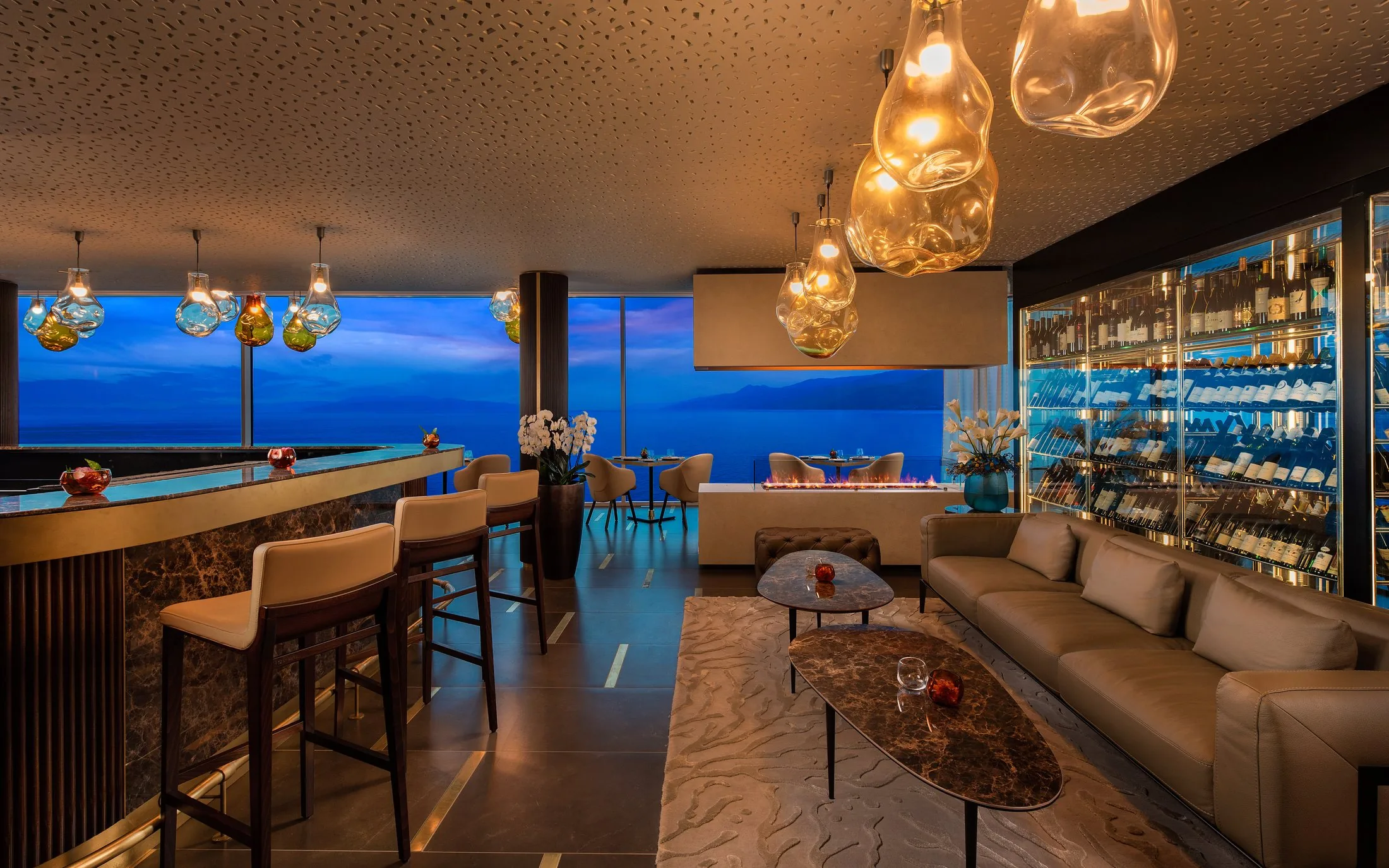
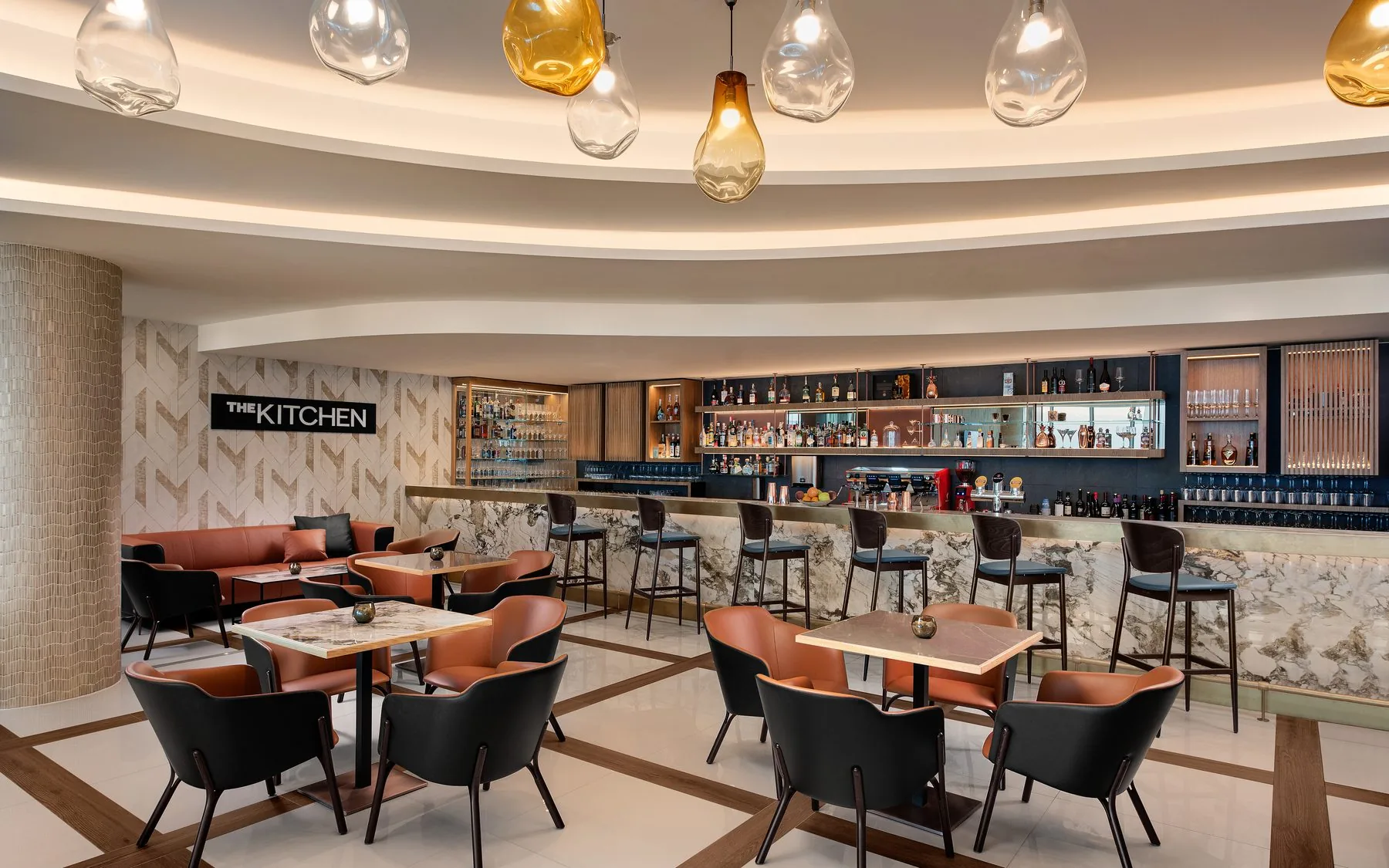
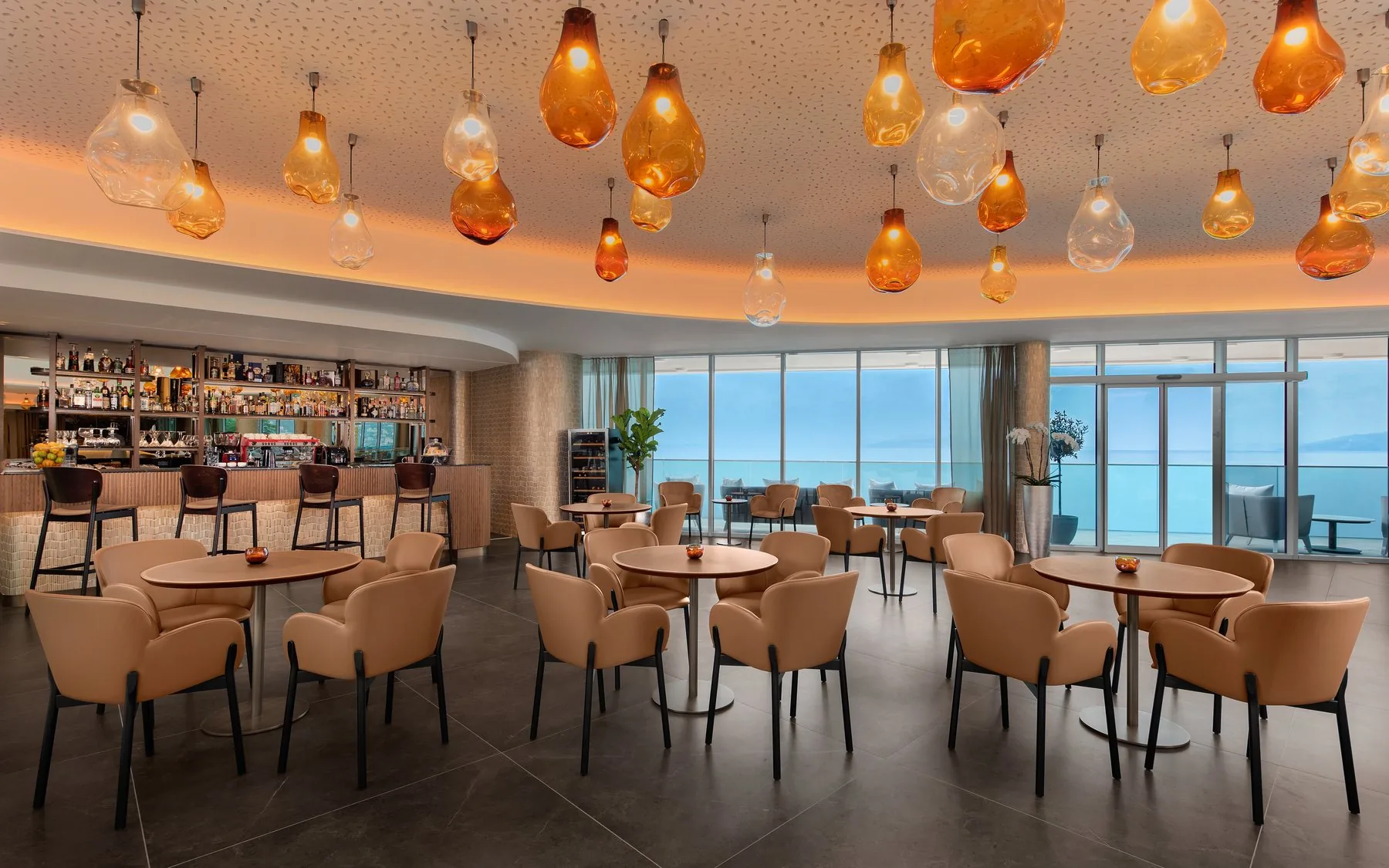
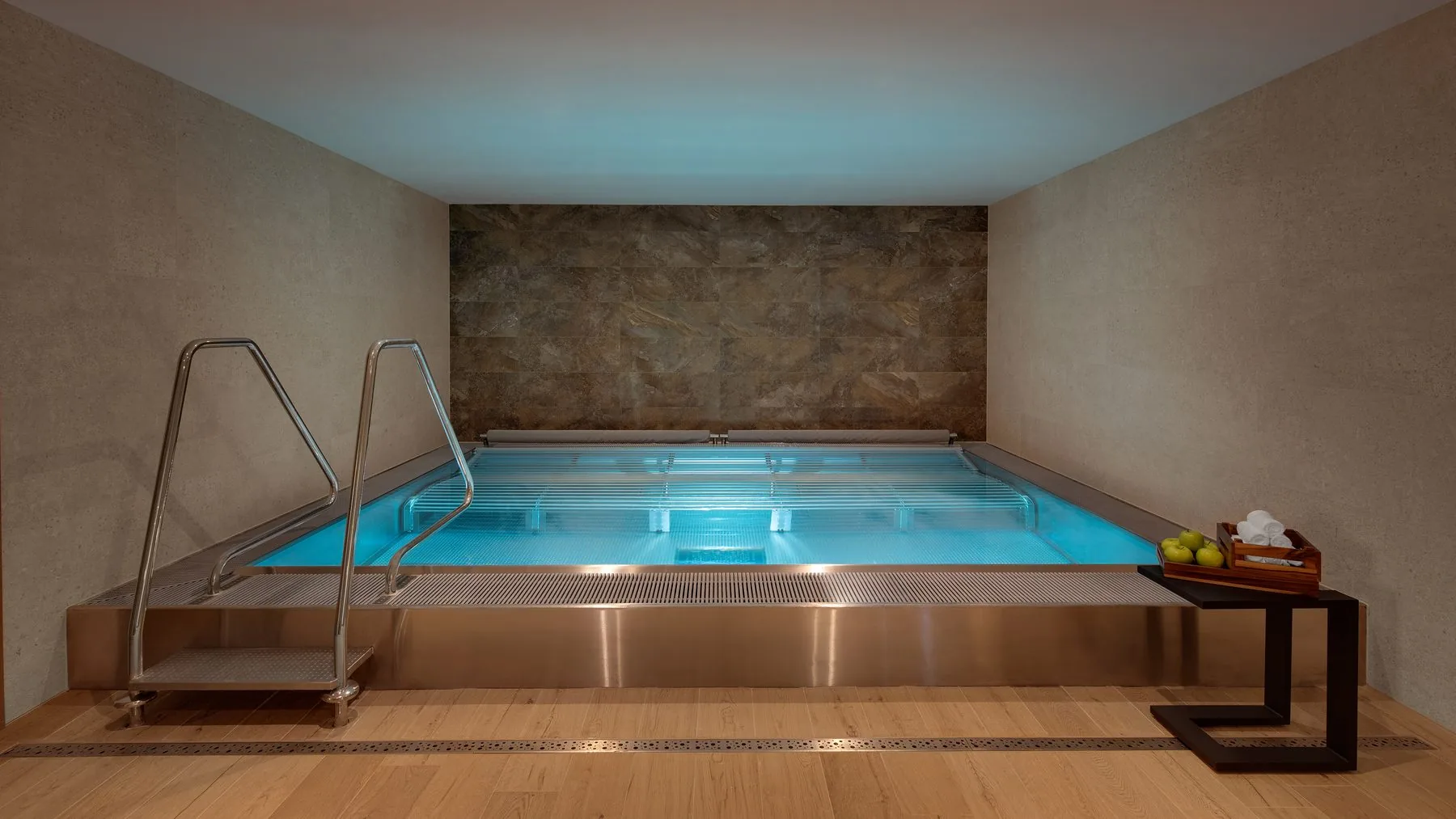
Some of the surfaces and furniture that left our workshop and were installed in high-end hospitality properties. No names, no façades, no signage: discretion is part of the service, and in any case the only thing that should speak here is the stone.
Food service
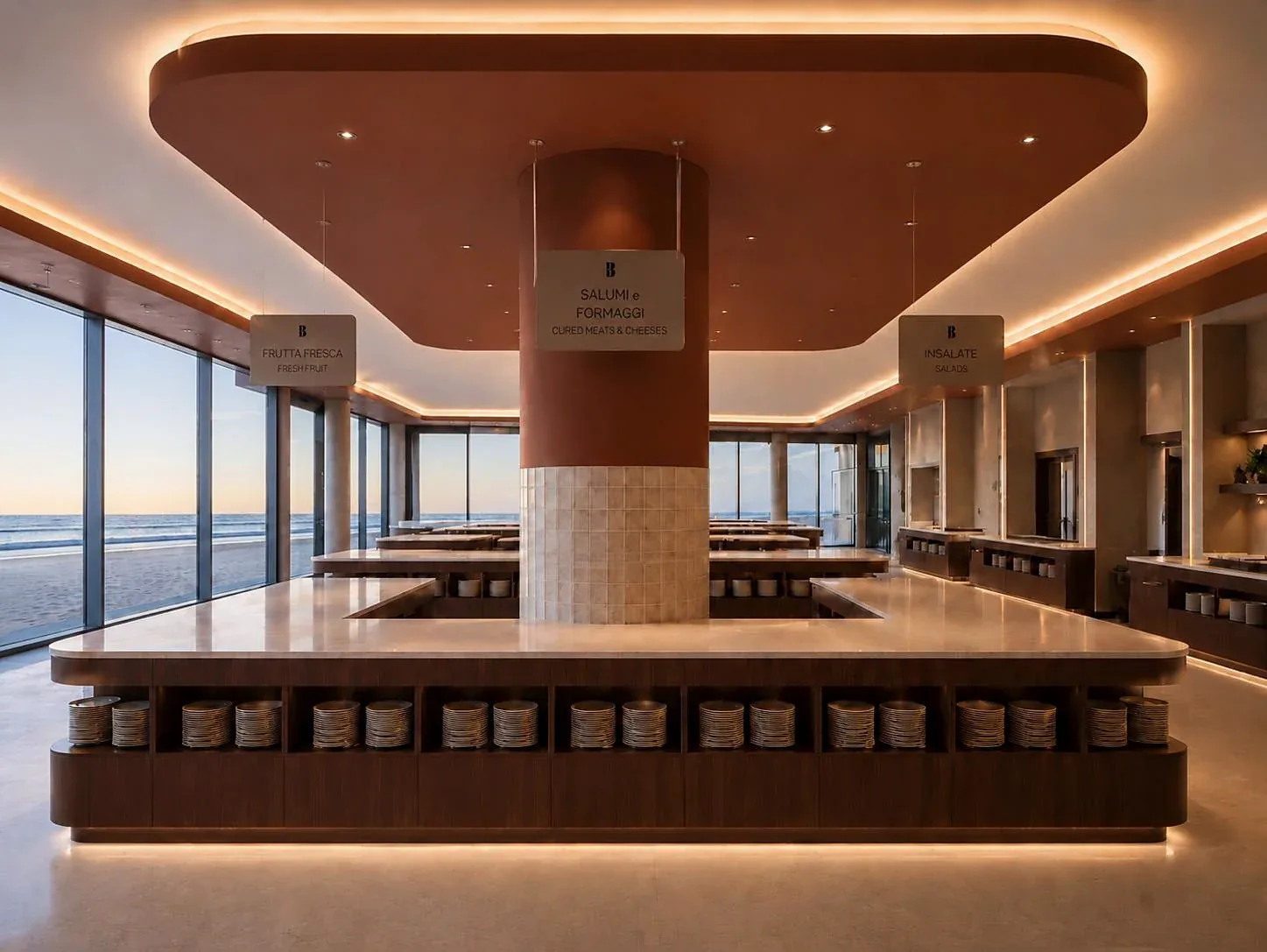
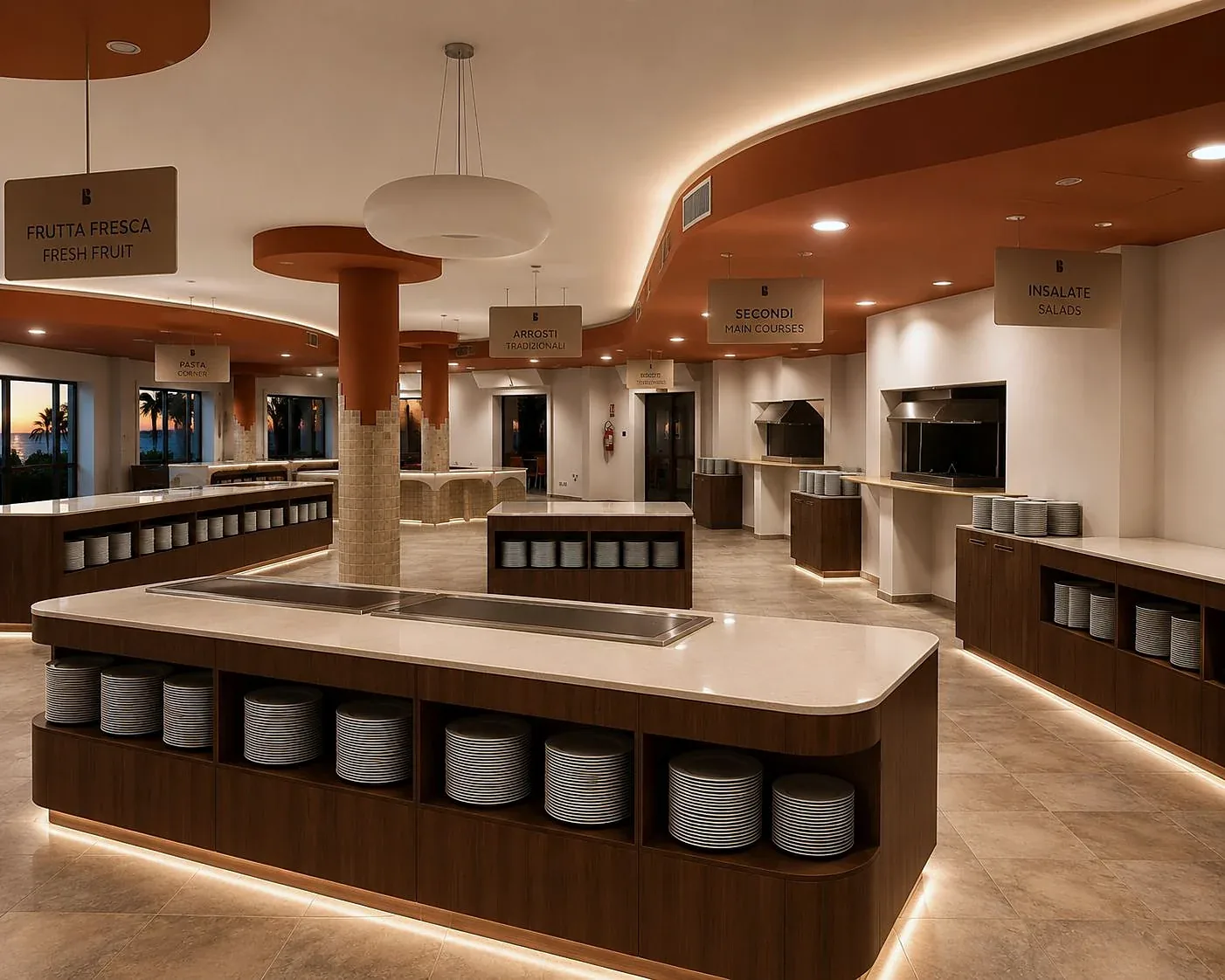
The restaurant of a seaside resort.
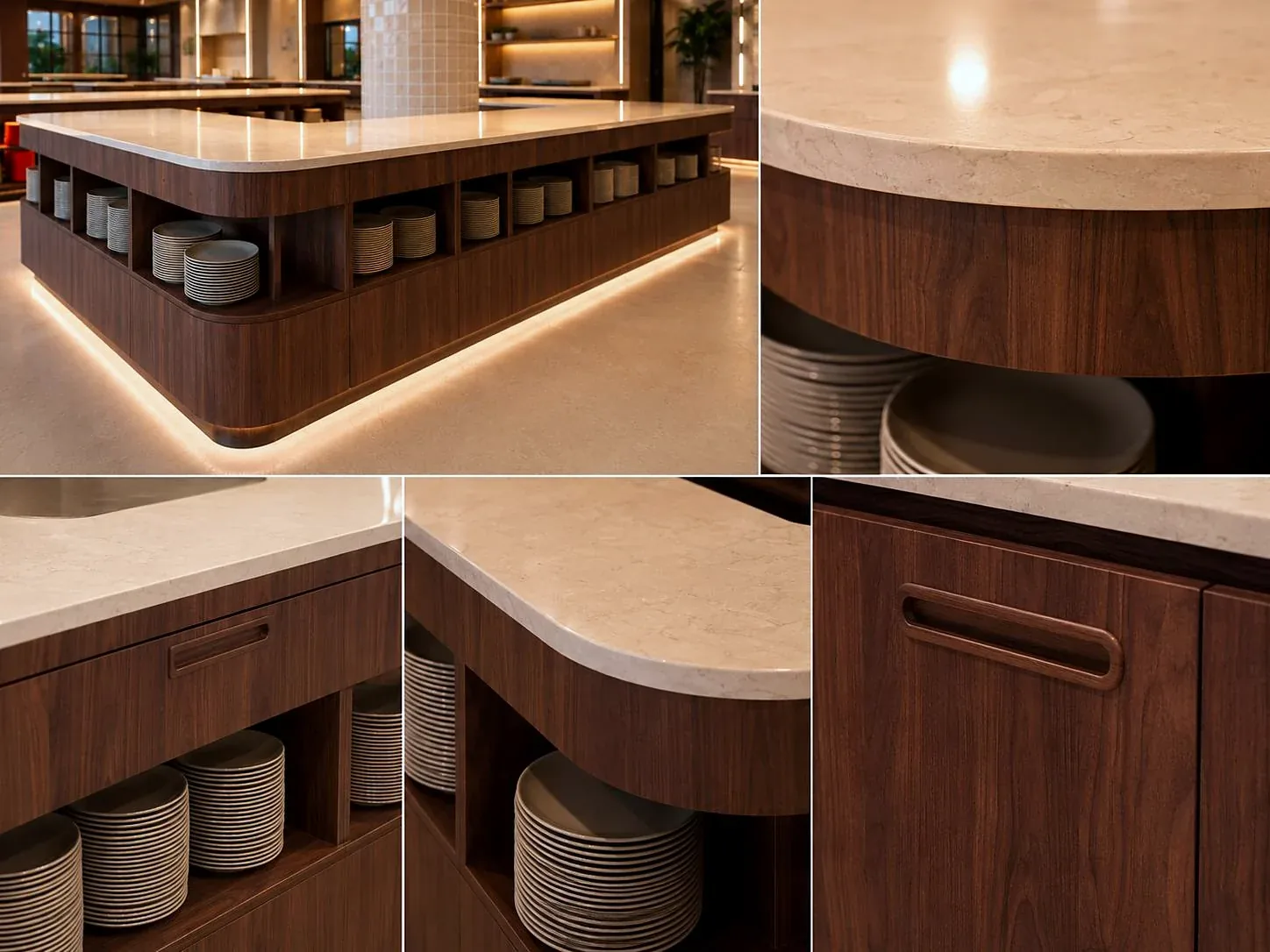
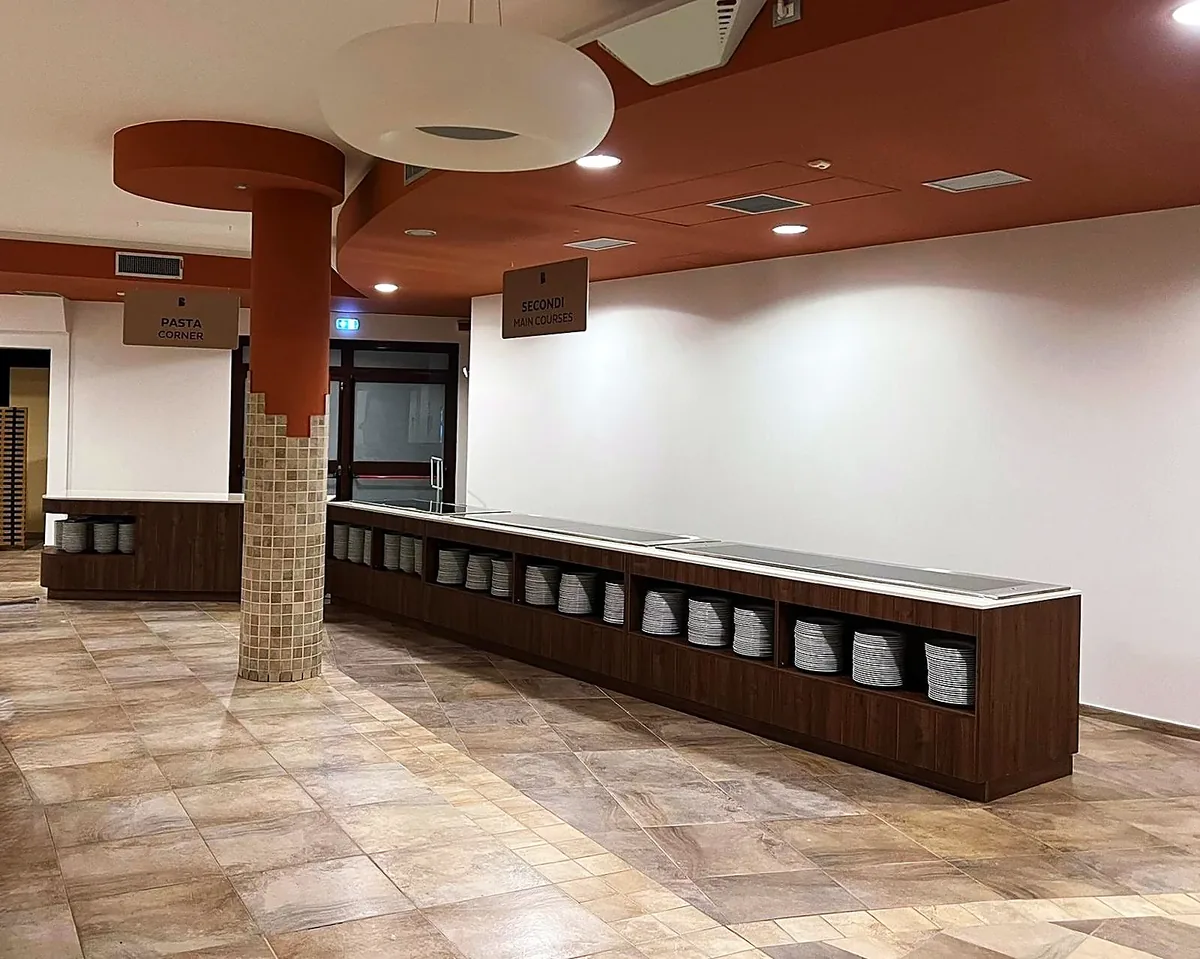
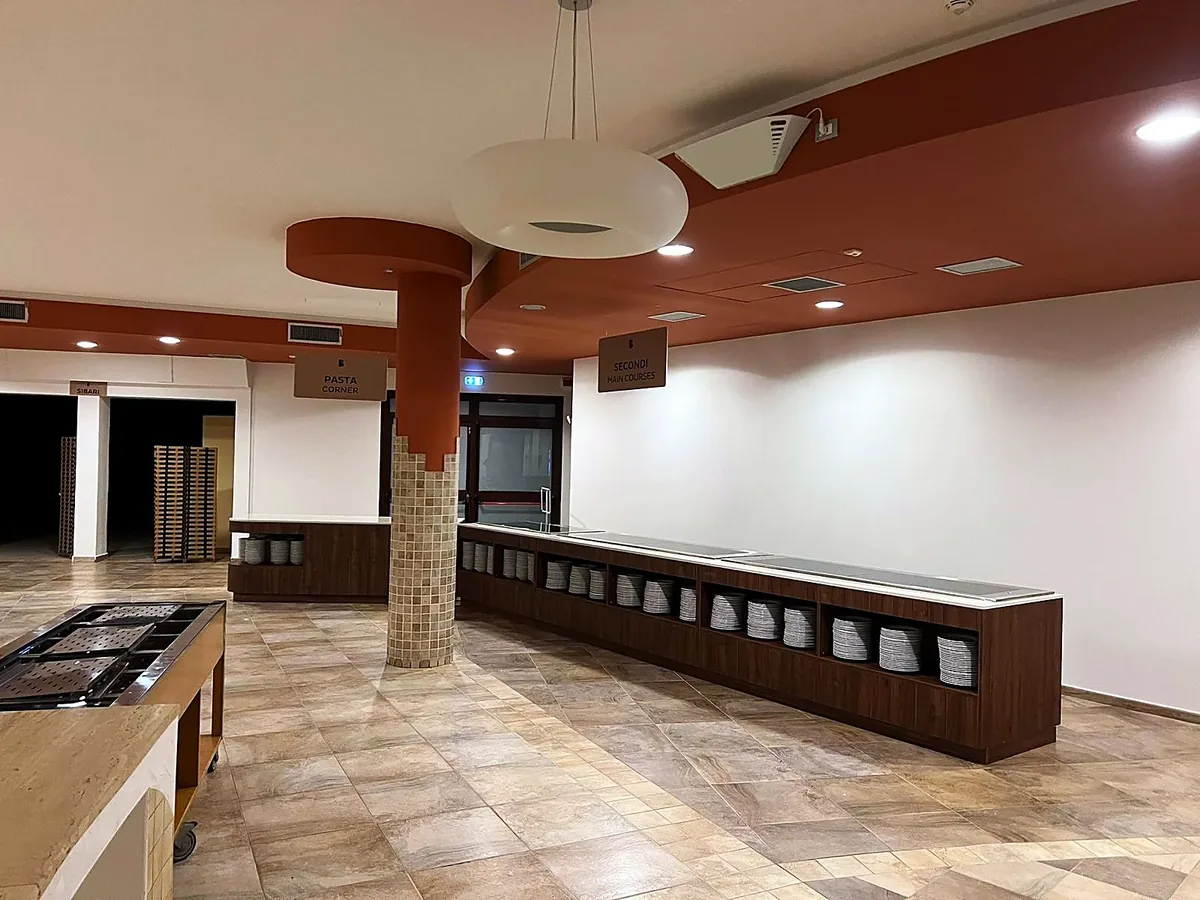
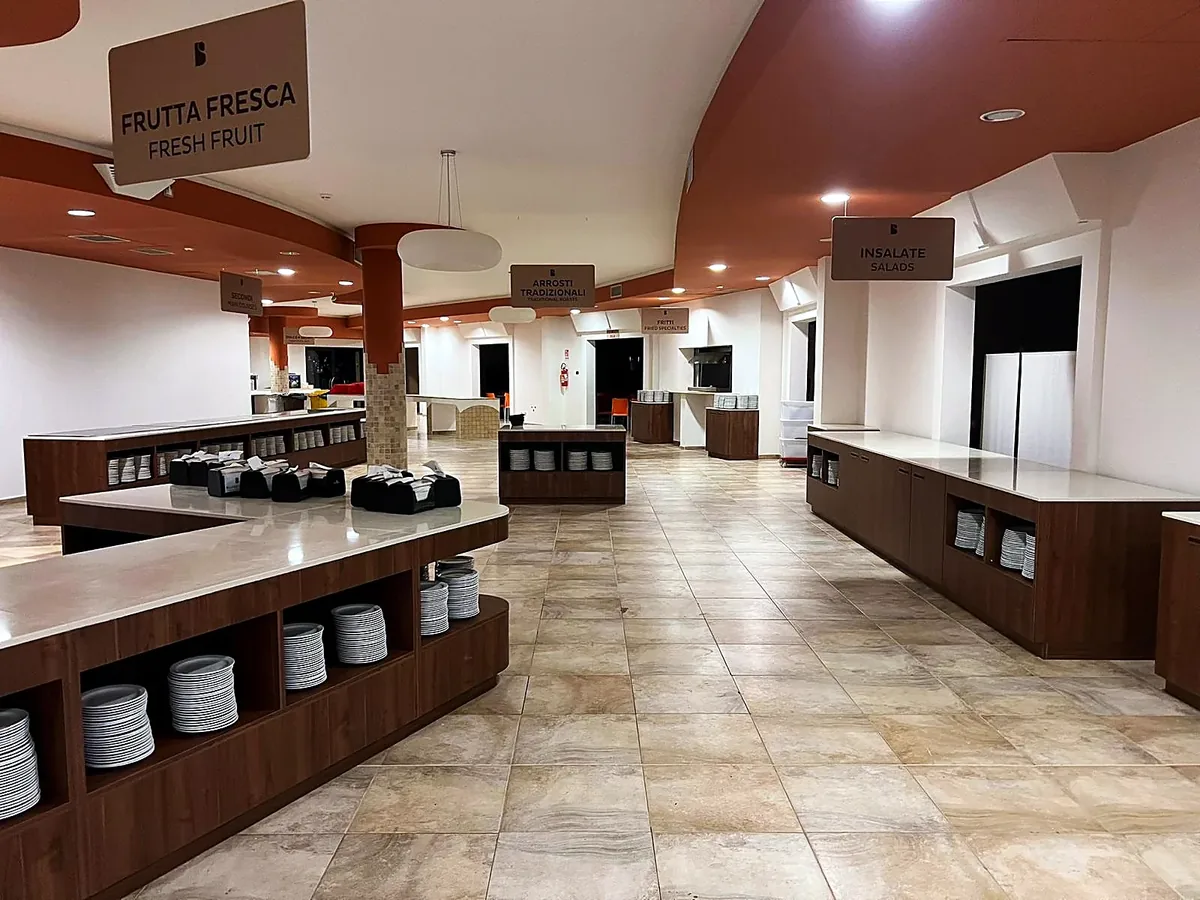
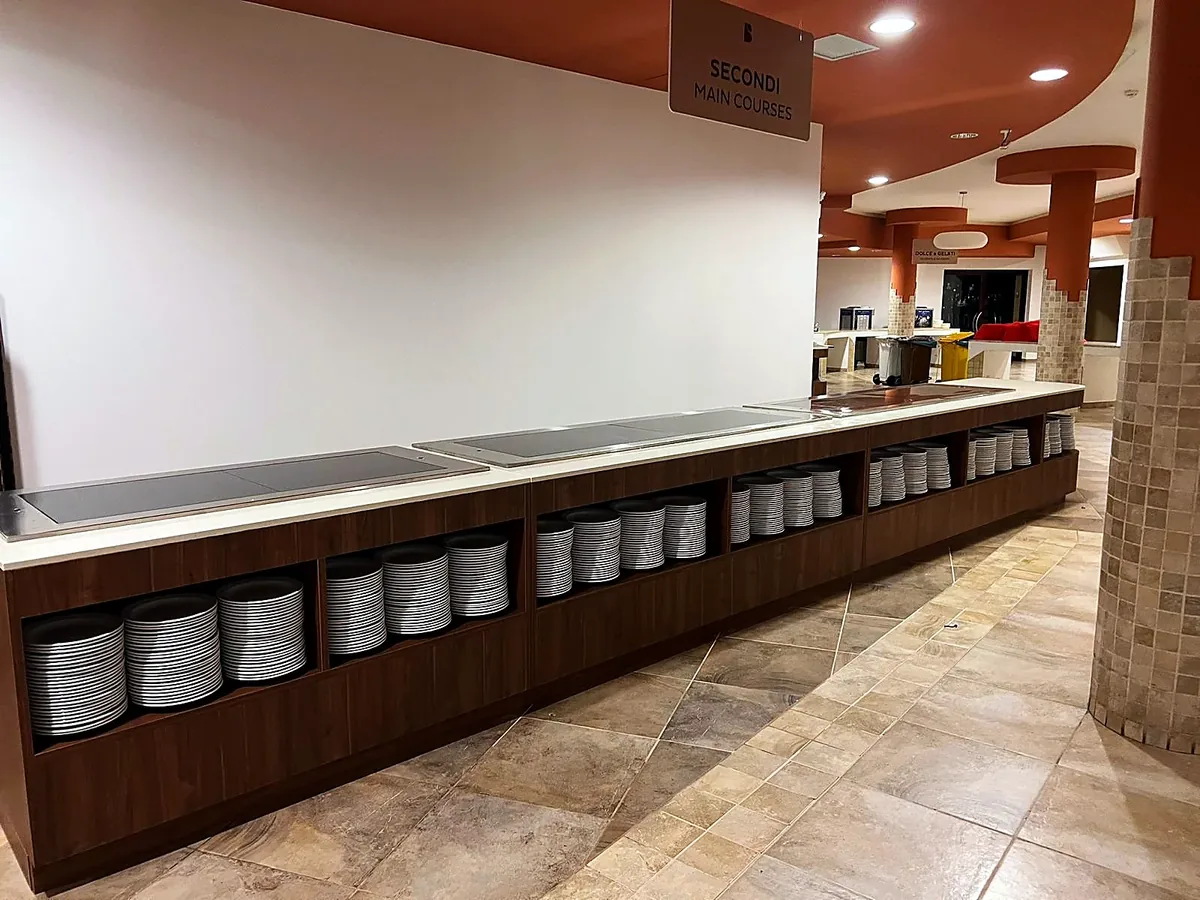
Buffet islands and service counters: walnut-veneered fronts with open compartments for the plates, light stone tops, induction plates set into the surface and a continuous led line at the base. Stone and wood leave the workshop on the same order, and that is what keeps the joint between the two materials continuous along the whole run of the counter.
On site
The same counters photographed during installation, before the room was dressed and opened: no styling, no set lighting.
The price
We are competitive because there is nobody in between.
In the usual route, between the mountain and the site you find an importer, a distributor, often a dealer and finally an outside workshop. Each takes their share, and each adds time. The client pays four margins and sees none of them.
We choose the material at the quarry face and work it in our own department. Two steps remain instead of six. This is not a promotion: it is how the company is built, and it does not change from one quotation to the next.
The quarry
The block is chosen on site, not from a price list.
Importer
Not there.
Distributor and dealer
Not there.
Outside workshop
Not there: the manufacture is ours.
The site
Delivery and installation agreed, by appointment.
Designing for intensive use
The questions we ask before choosing the slab.
There is no absolutely right stone: there is the right stone for that spot, with that finish and that treatment. These are the criteria we work by, and the same ones we discuss with the designer before quoting.
Material follows the spot
Marbles and onyxes are calcareous: they react to acids, and on a cocktail counter lemon leaves its mark. Where contact is constant and aggressive we use quartzites and granites, siliceous and far harder. Marble stays where it is looked at more than it is worn.
The finish hides or reveals
Polishing gives depth and reflection but reveals every micro-scratch: fine on a reception desk, less so on a working top. Honed and leathered finishes do the opposite, softening marks and haloes. Choosing a finish is a maintenance decision, not only an aesthetic one.
Treatments that penetrate, not coat
Impregnating sealers penetrate the pore structure and reduce absorption of liquids and oils without forming a film: they do not change the colour and do not peel. Surface films do the opposite, and in a public venue they last a season. Treatment must be renewed: it is a programme, not a one-off.
Thickness and edges
On points of constant contact we avoid knife-thin profiles and leave material at the outer edge; rounded arrises resist impact far better than sharp ones. On thin slabs and backlit onyx a fibreglass reinforcing mesh is applied to the back.
On floors, slip resistance is law
For pedestrian routes, Italian D.M. 236/89 requires a friction coefficient above 0.40 by the B.C.R.A. method, and Legislative Decree 81/2008 places non-slip flooring among the employer's obligations. Floor finish is chosen from there, and the value is verified on the actual material.
Maintenance is handed over in writing
With the work we hand over instructions: what to use, what not to use, how often to renew the sealer. Most damage to stone in public venues does not come from use, it comes from the wrong cleaner used for two years.
Values and treatments are defined on the project's actual material: the same variety can behave differently from slab to slab, and tests are run on the one chosen for you.
With design practices
We give you the sample, not the promise.
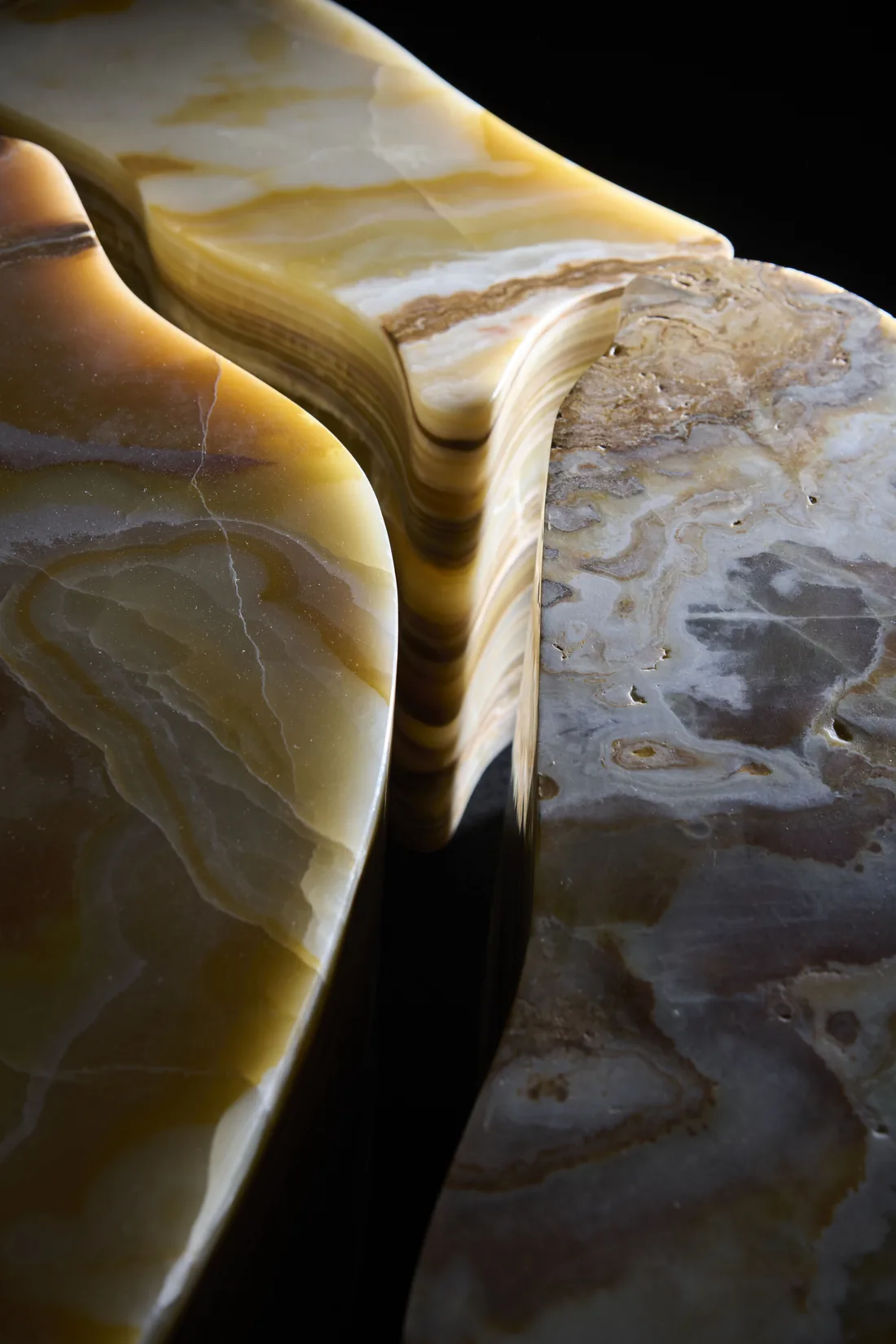
With architects and interior designers the method has always been the same: samples of the real material, photographs of the whole slab before cutting, detail drawings of the junctions, and the right to change the slab if it does not convince. On request we study book-matched veining for continuous fronts.
On timing we are explicit: production takes six to eight weeks, plus transport and installation. A contract project is planned on that number, and we do not discover that number halfway through the site.
Technical documentation
The dimensions, before the conversation.
Each sheet gives the dimensions of the standard design, the materials, the thicknesses and the installation notes. These are the numbers that tell you whether a work fits a project, and we make them available without asking anything in return.
Dimensions refer to the standard design. Every work is made to measure: size, stone and finish are defined with the project. For CAD drawings of the junctions and for samples, write to us.
Let's talk
Send us the drawings. We answer with a real quotation.
A few things are enough for an assessment: plans or detail drawings, approximate quantities, the material if you already have one in mind, and the site dates. If the material has not been chosen yet, we start there together.
The Cantù showroom is visited by appointment, and for contract projects it is where the conversation moves fastest: slabs are looked at and touched.